
Introduction
Product Overview
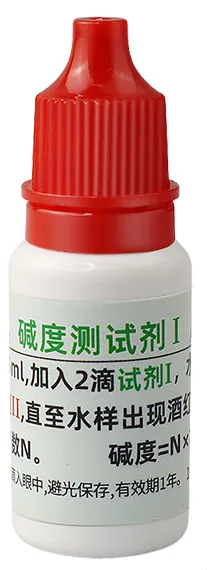
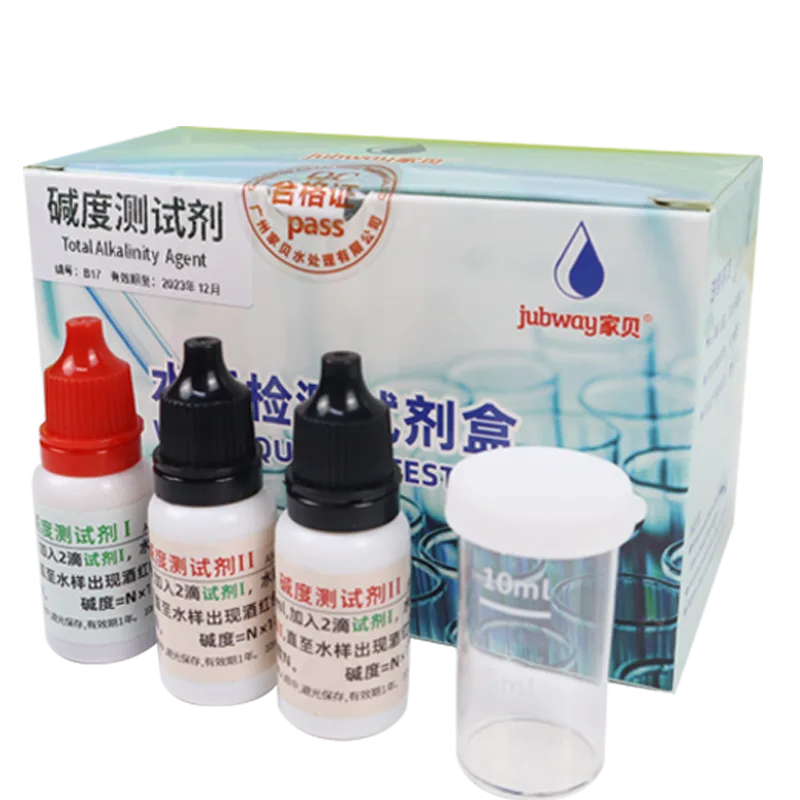
The B17 Alkalinity Test Reagent (10ml) is a chemical reagent kit designed for rapid detection of alkalinity values in water samples. By adding Alkalinity Test Reagent I and II dropwise, the water sample changes color, helping users determine whether the alkalinity value is within an appropriate range. The kit includes a measuring cup and is suitable for on-site testing, routine water quality monitoring, and alkalinity control in water-related industries.
Product Features
- Easy operation: Add the reagent dropwise and observe the result. No professional instruments are required, facilitating rapid on-site testing.
- Complete components: Includes Alkalinity Test Reagent I, II and a measuring cup, ready to use out of the box.
- Portable design: With dimensions of 60×20×20mm, it is compact and easy to carry.
- Economical usage: 10ml provides approximately 200 drops. The amount used per test is small, supporting multiple tests.
- Wide applicability: Suitable for tap water, aquaculture water, and other water-related industries that require alkalinity control.
- Easy storage: Simply store away from light; daily storage is simple.
Key Specifications
- Product model: B17
- Product name: Alkalinity Test Reagent
- Volume: 10ml (approximately 200 drops)
- Kit contents: Alkalinity Test Reagent I × 1, Alkalinity Test Reagent II × 2, measuring cup
- Product dimensions: 60×20×20mm
- Test item: Alkalinity value of water samples
- Applicable scope: Tap water, aquaculture water, and other water-related industries requiring alkalinity control
- Precautions: Do not ingest; store away from light
Application Scenarios
- Tap water quality monitoring: Used for routine testing of alkalinity levels in tap water.
- Aquaculture water management: Monitor alkalinity changes in aquaculture water to help maintain stable water quality.
- Water treatment process control: Suitable for water treatment stages where alkalinity control is required.
- On-site rapid testing: Easy for personnel to carry to different locations for preliminary alkalinity testing.
FAQ
Q: What can this alkalinity test reagent detect?
A: The B17 Alkalinity Test Reagent is used to detect the alkalinity value of water samples and helps determine the water's buffering capacity against acids. It is suitable for tap water, aquaculture water, and other water samples.
Q: What components are included?
A: It includes Alkalinity Test Reagent I × 1, Alkalinity Test Reagent II × 2, and a measuring cup.
Q: Approximately how many tests can be performed with 10ml of reagent?
A: 10ml provides approximately 200 drops. The amount used for each test is very small. The exact number of tests depends on the amount used per test. Please follow the instructions.
Q: How should the product be stored after use?
A: After use, tighten the cap, store away from light, and keep out of reach of children.
Q: What should be done if the reagent is swallowed or comes into contact with the body?
A: This product has a "Do not ingest" warning. If accidental ingestion or any other accident occurs, take the product packaging with you and seek medical attention immediately.
Related Terms
- Alkalinity: The total amount of alkaline substances in water that can neutralize strong acids.
- Total alkalinity: Generally refers to the sum of alkaline components such as carbonate, bicarbonate, and hydroxide in a water sample.
- pH value: Indicates the acidity or alkalinity of water. It is related to alkalinity but is a different concept.
- Titration: A method of determining the content of a test substance by adding a reagent of known concentration dropwise and observing the color change.
- Hardness: An indicator of calcium and magnesium ion content in water. It is different from alkalinity but is often considered together in water quality management.