
Introduction
Product Definition
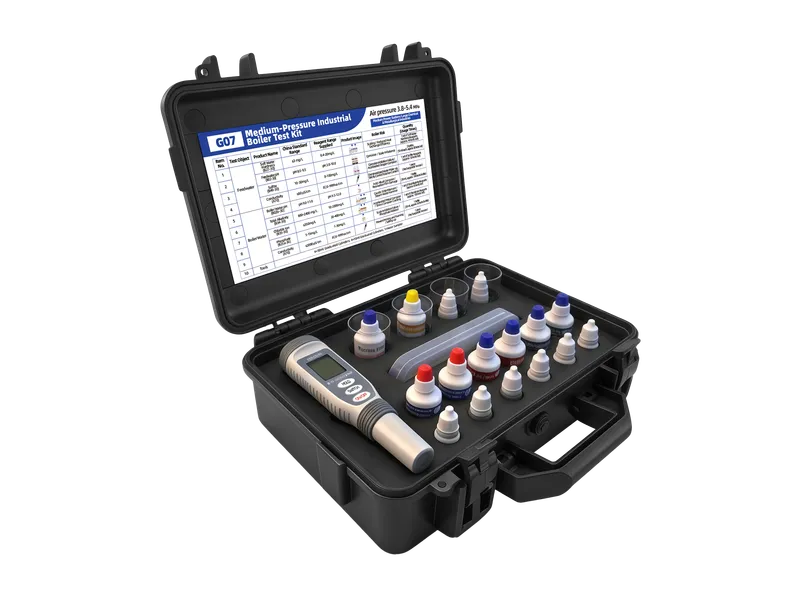
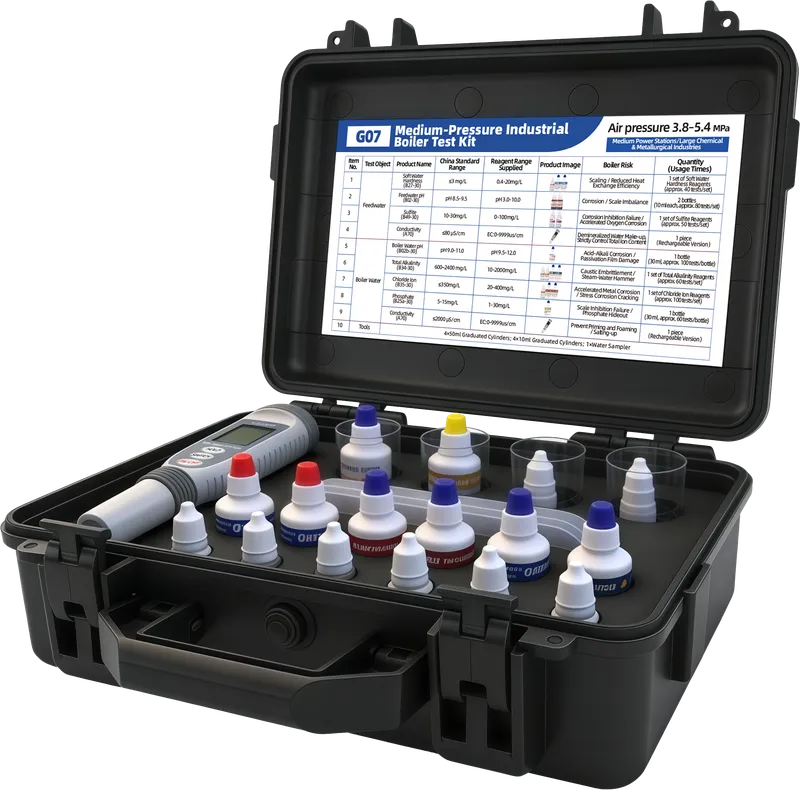
The G07 Medium-Pressure Industrial Boiler Testing Kit is a complete water quality testing product suite designed specifically for 3.8–5.4 MPa medium-pressure industrial boilers. Based on the indicator requirements of GB/T 1576-2018, the kit integrates testing capabilities for core parameters such as hardness, alkalinity, pH, chloride, phosphate, and sulfite, covering both boiler feedwater and boiler water scenarios. It is applicable to periodic inspection, operation and maintenance monitoring, and on-site inspection of thermal power plants and medium-sized boilers.
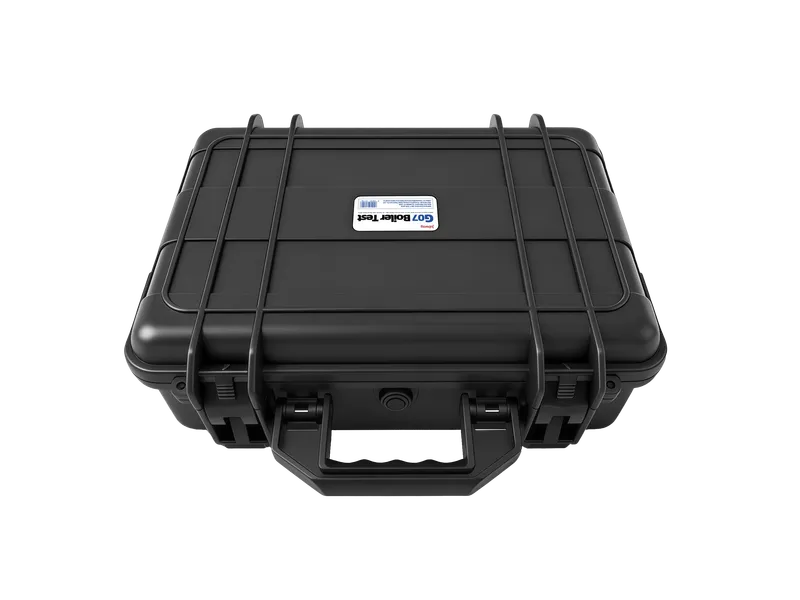
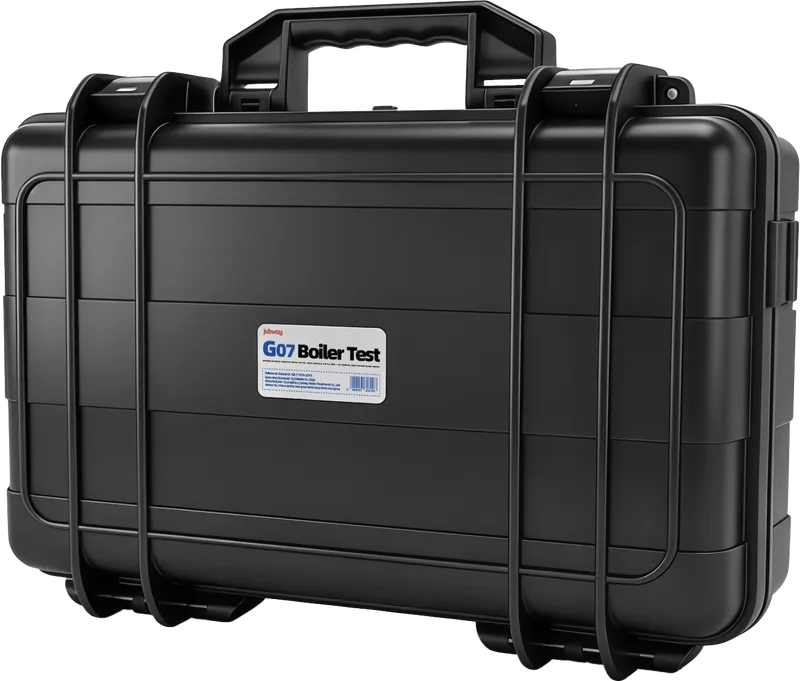
The product adopts an integrated, all-in-one design, delivering test reagents, supporting tools, and a storage case as a complete set. No large laboratory equipment is required on site, and multiple water quality parameters can be tested within minutes. The product is benchmarked against GB/T 1576-2018, meeting the requirements for periodic inspection and operation/maintenance acceptance of special equipment. At the same time, it combines portability, ease of use, and economy, with reagents available for separate refills. This helps operation and maintenance personnel efficiently implement feedwater and boiler water quality control, promptly identify risks such as scaling, corrosion, oxygen corrosion, and caustic embrittlement, and ensure safe and stable boiler operation.
Product Features
- Integrated multi-parameter testing: A single kit can test core parameters including hardness, alkalinity, pH, chloride, phosphate, and sulfite. The reagents provide clear color development with low error, meeting the accuracy requirements of industrial boiler water quality control.
- Dual-scenario coverage for feedwater/boiler water: Supporting both boiler feedwater and boiler water testing, it enables one-stop, full-process water quality operation and maintenance monitoring.
- Rapid on-site testing: No large laboratory equipment is required, and results are available within minutes, making it well suited for real-time control scenarios such as on-site inspection and shift spot checks.
- National standard compliance: All parameters fully comply with GB/T 1576-2018, satisfying compliance work such as periodic inspection and operation/maintenance acceptance of special equipment.
- Risk warning and prevention: Water quality results help promptly identify tendencies toward scaling, corrosion, oxygen corrosion, and caustic embrittlement, reducing boiler shutdown and maintenance costs.
- Low barrier, low-cost operation: Portable and easy to operate, allowing maintenance personnel with zero prior experience to get started; reagents support separate refills/refill packs, eliminating the need to repurchase the entire tool set.
Core Parameters
- Applicable boiler type: Medium-pressure industrial boiler
- Applicable pressure range: 3.8–5.4 MPa
- Reference standard: GB/T 1576-2018 'Industrial Boiler Water Quality'
- Test parameters: Hardness, alkalinity, pH, chloride, phosphate, sulfite
- Test scenarios: Boiler feedwater, boiler water
- Delivery form: Integrated set of test reagents + supporting tools + storage case
- Time to results: A few minutes
- Refill method: Reagents support separate refills/refill packs
Application Scenarios
- Daily feedwater and boiler water monitoring for medium-pressure industrial boilers at thermal power plants
- Periodic inspection of 3.8–5.4 MPa medium-pressure industrial boilers
- Boiler operation and maintenance inspections and shift spot checks
- On-site sampling and rapid testing by special equipment inspection agencies
- Boiler maintenance acceptance and water quality verification for boiler startup and shutdown
- Emergency troubleshooting of suspected water quality issues such as scaling and corrosion
FAQ
Q: What type of boiler is the G07 suitable for?
A: It is suitable for 3.8–5.4 MPa medium-pressure industrial boilers, commonly found in thermal power plants and medium-sized boiler rooms.
Q: What standard is the product based on?
A: All parameters fully comply with GB/T 1576-2018 'Industrial Boiler Water Quality', meeting the requirements for periodic inspection and operation/maintenance acceptance of special equipment.
Q: What parameters can be tested?
A: A single kit can test core parameters including hardness, alkalinity, pH, chloride, phosphate, and sulfite.
Q: Does it require a professional laboratory or professionally trained operators?
A: No large laboratory equipment is required, and results are available within minutes. Operation and maintenance personnel can get started with zero prior experience, with no professional training needed.
Q: What does the kit include?
A: It includes test reagents, supporting tools, and a storage case, ready to use out of the box, suitable for bulk procurement and operation/maintenance reserve.
Q: What should I do after the reagents are used up?
A: Reagents support separate refills/refill packs, so there is no need to repurchase the entire tool set, reducing long-term usage costs.
Related Terms
- Medium-pressure industrial boiler: An industrial boiler with a working pressure in the 3.8–5.4 MPa range, commonly used in scenarios such as combined heat and power generation and medium-sized power supply.
- Boiler feedwater: Treated water before it enters the boiler; its quality directly affects the risks of boiler scaling and corrosion.
- Boiler water: The furnace water concentrated during heating and evaporation in the boiler; parameters such as alkalinity, chloride, and phosphate need to be controlled.
- GB/T 1576-2018: The national standard 'Industrial Boiler Water Quality', which specifies the control indicators and limits for feedwater and boiler water.
- Hardness: Indicates the content of calcium and magnesium ions in water; excessive hardness tends to cause scaling on heating surfaces.
- Alkalinity: Indicates the content of alkaline substances in water; excessive levels may cause caustic embrittlement, while insufficient levels are unfavorable for corrosion prevention and scale control.
- pH: The acidity or alkalinity of water; abnormal pH may aggravate corrosion or affect the effectiveness of chemical agents.
- Chloride: The chloride content in water; excessive levels may induce electrochemical corrosion and stress corrosion.
- Phosphate: A commonly used scale-inhibiting agent/control indicator in boiler water; it helps maintain pH and form a protective film.
- Sulfite: A reducing agent/control indicator used for deoxygenation; it effectively prevents oxygen corrosion.
- Oxygen corrosion: Corrosion formed on boiler metal surfaces by dissolved oxygen, commonly occurring in feedwater systems and economizers.
- Caustic embrittlement: A tendency for brittle cracking that may occur when boiler water is excessively alkaline and the metal is under tensile stress.